
You see someone post, “Bro has so much aura,” or a friend says, “I lost all my aura,” and suddenly you are wondering what they mean.
Is aura about looks? Confidence? Popularity? Something else?
The phrase aura meaning slang is searched because the word “aura” now has a strong meaning in online chats, memes, gaming, TikTok-style posts, and everyday Gen Z conversations.
While the normal word refers to a feeling or quality that seems to surround a person, slang uses it in a much more casual way.
In slang, your “aura” is often about the energy, presence, confidence, or cool factor you give off.
Someone can gain aura by doing something impressive. They can also lose aura after an awkward or embarrassing moment.
This guide explains the modern aura meaning slang in simple English.
You will learn what it means in texts, social media, dating, gaming, work chats, and real conversations.
You will also see examples and learn how to respond when someone uses the word.
What Does “Aura Meaning Slang” Mean in Text?
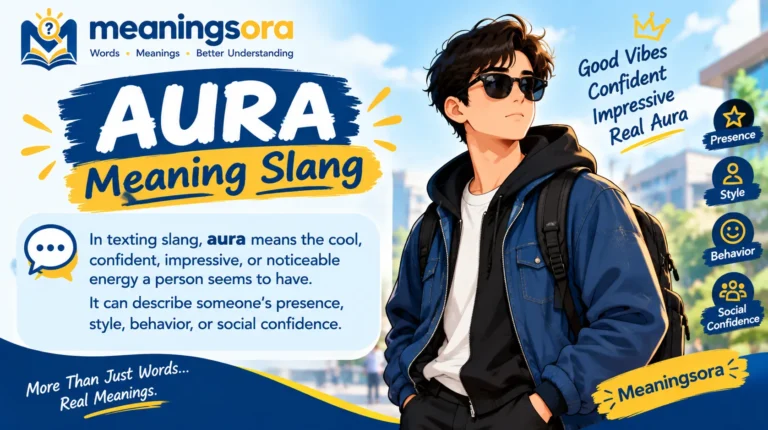
In texting slang, aura means the cool, confident, impressive, or noticeable energy a person seems to have. It can describe someone’s presence, style, behavior, or social confidence. People may say someone has “good aura,” “negative aura,” or that they “gained aura” after a cool moment.
Common interpretations include:
- Cool presence: Someone naturally seems confident or impressive.
- Good energy: A person gives off a positive feeling.
- Social status: Someone looks respected, popular, or hard to ignore.
- Confidence: A person acts calm and sure of themselves.
The exact meaning depends on the situation.
The Most Common Meanings of “Aura Meaning Slang”
1. Aura Means Cool Energy
The most common slang use is to describe someone’s cool energy.
If someone walks into a room and seems calm, confident, and stylish, people may say they have “aura.”
Example:
“He walked in like he owned the place. Bro has aura.”
Here, aura does not mean anything physical. It means the person’s presence feels strong and impressive.
2. Aura Means Confidence
Aura can also describe confidence.
A person does not need to talk a lot to have aura. Sometimes being calm and comfortable is enough.
Example:
“She gave her answer without getting nervous. Huge aura.”
The speaker is praising her confidence.
3. Aura Means Charisma
Another meaning is close to charisma.
Someone with aura may attract attention without trying too hard. They may have a strong personality, good style, or a natural way of making people notice them.
Example:
“He barely said anything, but everyone listened. That is aura.”
In this case, aura means strong personal presence.
4. Aura Means Impressive Social Energy
Online users also talk about aura when someone handles a situation extremely well.
A person can “gain aura” by making a smart move, winning a difficult challenge, or staying calm during pressure.
Example:
“He scored the winning goal and walked away like nothing happened. +100 aura.”
The number is usually playful. It treats aura like imaginary points.
5. Aura Can Mean Someone’s Overall Vibe
Sometimes aura is simply a person’s overall vibe.
Their clothes, voice, attitude, confidence, and behavior can all create this impression.
Example:
“I don’t know how to explain it. She just has a good aura.”
The speaker means the person gives off a positive and attractive feeling.
6. “Losing Aura” Means Looking Less Cool
The slang can also work in the opposite direction.
If someone does something embarrassing, awkward, or uncool, people may joke that they “lost aura.”
Example:
“He tried to look cool and then walked into the door. -500 aura.”
This is normally a joke rather than a serious insult.
7. “Gaining Aura” Means Doing Something Cool
“Gain aura” means doing something that makes you look more impressive.
Example:
“She helped everyone and stayed calm during the whole problem. She gained aura.”
People may also use fake scores:
“Bro just gained +1,000 aura.”
These numbers are not real measurements. They make the joke more dramatic.
How “Aura Meaning Slang” Is Used in Real Conversations
Friends & Casual Texting
Among friends, aura is often used as a joke or compliment.
Someone might send a photo of a friend looking confident and write:
“The aura is crazy.”
Another person might make a small mistake and hear:
“You just lost aura.”
The word works well because it can describe many things without needing a long explanation.
Friends may also create imaginary “aura points.”
For example:
“You remembered her birthday. +200 aura.”
Or:
“You forgot your own password. -300 aura.”
This makes ordinary events sound like a game.
The tone is usually playful. Friends may say things that sound negative but are not meant seriously.
Instagram & Snapchat
On Instagram and Snapchat, aura often appears in captions, comments, stories, and replies.
A photo showing a stylish outfit might get a comment such as:
“Insane aura.”
A confident picture might receive:
“Bro has unlimited aura.”
The term can also be used ironically. Someone may post an awkward picture and joke:
“My aura left the chat.”
Social media makes aura slang especially flexible. It can describe looks, confidence, a funny moment, a social interaction, or even a dramatic photo.
Because online tone is hard to read, the surrounding caption and comments often show whether the person is being serious or joking.
Dating Apps
On dating apps, aura can describe someone’s attractiveness, confidence, or overall vibe.
For example:
“Your profile has good aura.”
This could mean the person seems confident, interesting, stylish, or easy to like.
Someone might also say:
“He has no aura.”
That usually means the person seems awkward, boring, overly nervous, or lacking confidence.
However, dating conversations need more care. A phrase that sounds funny between friends can feel strange from a stranger.
If someone you do not know well says:
“You have crazy aura.”
It may be a compliment, but the exact tone depends on the conversation.
Gaming & Online Communities
Gaming communities use aura slang heavily because many gaming moments are about skill, confidence, wins, and dramatic plays.
A player who wins a difficult match may be described as having “aura.”
Someone who makes a terrible mistake may be told:
“You lost all your aura.”
A player who remains calm while everyone else panics might hear:
“That was pure aura.”
In gaming, aura can also be used as a meme rather than a serious description of skill.
A player can make one impressive move and suddenly “gain 10,000 aura.” The exaggerated number is part of the joke.
Work or Professional Chat
Aura is much less common in formal workplace communication.
A close group of younger coworkers may use it casually in a private chat, especially when discussing a funny situation.
For example:
“You handled that meeting really well. +100 aura.”
But it would usually be better to avoid slang like this in a formal email, client message, job application, report, or serious business conversation.
Instead of:
“You have amazing aura.”
A professional version might be:
“You made a strong impression during the meeting.”
The second version is clearer and more suitable for work.
Is “Aura Meaning Slang” Rude, Flirty, or Offensive?
The word aura is usually not rude or offensive when used as slang. In most cases, it is positive, playful, or humorous.
Still, context matters.
When Aura Is Positive
If someone says:
“You have great aura.”
They probably mean you seem confident, cool, attractive, calm, or pleasant.
Likewise:
“That was +500 aura.”
usually means someone did something impressive.
When Aura Is Negative
The word can become negative when paired with phrases such as:
“No aura.”
or:
“You lost all your aura.”
These comments can suggest that someone looked awkward, embarrassed, boring, or uncool.
Between friends, this is often harmless teasing.
With strangers, however, it may sound insulting.
When Aura Is Flirty
Aura can sometimes be flirty.
If someone says:
“You have a really attractive aura.”
they may be talking about your overall presence or energy.
The word itself is not automatically romantic. The rest of the conversation tells you whether it is a compliment, a joke, or flirting.
When Aura Feels Offensive
Aura slang is rarely offensive by itself. The problem comes from how someone uses it.
If a person repeatedly tells another person they have “no aura,” the phrase can become a put-down.
It can also be uncomfortable when used to judge someone’s appearance or personality in a harsh way.
The safest rule is simple: look at the relationship, situation, and tone before deciding what the person means.
How to Respond When Someone Says “Aura Meaning Slang”
Your response should match the mood of the conversation.
Casual Replies
If a friend gives you an aura compliment, you can keep it simple:
“Haha, appreciate it.”
“I know.”
“Aura stays winning.”
“We take those.”
Funny Replies
If the conversation is clearly a joke, you can exaggerate it:
“+10,000 aura.”
“My aura is undefeated.”
“The aura department approved it.”
“Never doubted the aura.”
Neutral Replies
If you are not sure what the person means, ask:
“What do you mean by aura?”
Or:
“Haha, is that a compliment?”
This is useful when you are unfamiliar with slang.
Professional Replies
If someone uses aura casually at work and you want to keep things professional, respond to the actual compliment:
“Thanks, I appreciate that.”
If you need to clarify:
“Thanks. I’m glad the presentation went well.”
You do not need to use the same slang just because someone else does.
Common Misunderstandings About “Aura Meaning Slang”
Aura Does Not Always Mean Physical Energy
The normal word “aura” can refer to a feeling, atmosphere, or quality surrounding something.
Slang usually uses it more casually.
When someone says:
“He has aura,”
they are usually not claiming that they can literally see energy around the person.
They are talking about the impression that person gives.
Aura Is Not Exactly the Same as Looks
A person can have aura without being described as physically attractive.
Confidence, humor, calmness, style, skill, and social presence can all contribute to someone’s aura.
So:
“She has aura”
does not automatically mean:
“She is beautiful.”
It may mean she has a strong presence.
Aura Is Not Always Serious
A large amount of aura slang is used for humor.
People may give each other imaginary aura points for very small things.
For example:
“He opened the door on the first try. +50 aura.”
Nobody is actually measuring anything.
“No Aura” Does Not Always Mean Someone Is Bad
When someone says:
“Bro has no aura,”
they may simply be teasing.
It can mean the person had an awkward moment or failed to look confident. The statement is often exaggerated for comedy.
Aura and Vibe Are Similar but Not Identical
“Vibe” usually describes the feeling a person, place, or situation gives you.
“Aura” in slang often focuses more on the person’s presence, confidence, coolness, or social impact.
There is some overlap, but the words are not always interchangeable.
Similar Slang Terms You Should Know
1. Vibe
The general feeling or mood someone or something gives off.
2. Rizz
Slang for romantic charm or the ability to attract someone.
3. Drip
Stylish or impressive clothing and fashion.
4. W
A win, success, or positive outcome.
5. L
A loss, failure, or embarrassing result.
6. Based
A way to show strong approval of someone’s opinion or action.
7. Slay
Doing something extremely well, often with confidence or style.
8. Main character energy
Acting confident, noticeable, or like the central person in a situation.
9. Cooked
Being in a bad situation or having little chance of success.
10. Locked in
Being highly focused and serious about a task.
11. GOAT
An acronym meaning “greatest of all time.”
12. NPC
A slang comparison for someone who seems to act without much personality or independent thought.
These terms can overlap with aura slang. For example, someone with strong “main character energy” may also be described as having “aura.”
When You Should Avoid Using “Aura Meaning Slang”
Professional Settings
Avoid aura slang in formal emails, interviews, business proposals, academic work, and official documents.
Slang can make your message sound too casual.
Instead of:
“You have crazy aura in meetings.”
Try:
“You have a strong presence in meetings.”
The professional version communicates the same general idea more clearly.
Cross-Cultural Chats
Not everyone knows current Gen Z slang.
If you are speaking with someone from another country, age group, or online community, “aura” may not have the same meaning for them.
If your message matters, use simple language.
Instead of:
“You just gained aura.”
You could say:
“That was impressive.”
Sensitive Situations
Avoid joking about someone “losing aura” when they are genuinely embarrassed, upset, or struggling.
A joke that works among close friends may hurt someone in a serious moment.
For example, if someone makes a mistake during an important presentation, saying:
“You lost 1,000 aura”
may not be helpful.
Read the room before using slang.
FAQs
What does aura mean in Gen Z slang?
Aura usually means a person’s coolness, confidence, presence, or overall energy. Someone with strong aura may seem impressive, calm, stylish, or naturally confident.
What does “+100 aura” mean?
“+100 aura” means someone supposedly gained cool points after doing something impressive, confident, funny, or stylish. The number is usually an exaggeration for humor.
What does “-100 aura” mean?
“-100 aura” means someone had an awkward, embarrassing, or uncool moment. It is usually playful slang rather than a serious judgment.
Is having aura a compliment?
Yes, most of the time. Saying someone “has aura” usually means they have a strong, attractive, confident, or impressive presence.
What does “no aura” mean?
“No aura” usually means someone seems awkward, lacks confidence, or failed to create a strong impression. Among friends, it is often used as a joke.
Is aura the same as rizz?
No. They can overlap, but they mean different things. Rizz mainly refers to romantic charm or flirting ability, while aura is broader and can describe confidence, presence, style, or overall coolness.
Can I use aura in professional messages?
It is better to avoid it in formal communication. Use clearer phrases such as “strong presence,” “confidence,” “positive energy,” or “made a great impression.”
Final Thoughts.
The modern aura meaning slang is simple once you know the context. In most online conversations, aura describes the confidence, presence, coolness, or energy someone gives off.
Someone can have good aura after doing something impressive. They can “gain aura” after a great moment or “lose aura” after an awkward one.
People also use fake aura points to make ordinary situations funnier.
The word is common in casual texting, social media, gaming, memes, and conversations among younger internet users.
It is usually positive or playful, but it can become negative when used to mock someone.
The most important thing is context. If a friend says, “You have aura,” take it as a compliment.
If someone says, “You lost all your aura,” they are probably teasing you. And if you are unsure, simply ask what they mean.
Understanding slang is less about memorizing every new word and more about reading the situation.
Use “aura” when the setting is casual, know your audience, and switch to clearer language when the conversation is serious or professional.

James Anderson is a content writer passionate about making words, phrases, and everyday concepts easier to understand.